<?xml version="1.0" encoding="UTF-8"?>
<rss version="2.0"
	xmlns:content="http://purl.org/rss/1.0/modules/content/"
	xmlns:wfw="http://wellformedweb.org/CommentAPI/"
	xmlns:dc="http://purl.org/dc/elements/1.1/"
	xmlns:atom="http://www.w3.org/2005/Atom"
	xmlns:sy="http://purl.org/rss/1.0/modules/syndication/"
	xmlns:slash="http://purl.org/rss/1.0/modules/slash/"
	>

<channel>
	<title>Videatives Views &#187; Videative Views</title>
	<atom:link href="http://videatives.com/blog/category/videative-views/feed/" rel="self" type="application/rss+xml" />
	<link>http://videatives.com/blog</link>
	<description></description>
	<lastBuildDate>Thu, 10 May 2012 10:26:35 +0000</lastBuildDate>
	<generator>http://wordpress.org/?v=2.9.2</generator>
	<language>en</language>
	<sy:updatePeriod>hourly</sy:updatePeriod>
	<sy:updateFrequency>1</sy:updateFrequency>
			<item>
		<title>Issue #141, Reinventing Music Notation</title>
		<link>http://videatives.com/blog/2011/11/issue-141-reinventing-music-notation/</link>
		<comments>http://videatives.com/blog/2011/11/issue-141-reinventing-music-notation/#comments</comments>
		<pubDate>Tue, 08 Nov 2011 13:02:13 +0000</pubDate>
		<dc:creator>Staff</dc:creator>
				<category><![CDATA[Videative Views]]></category>

		<guid isPermaLink="false">http://videatives.com/blog/?p=616</guid>
		<description><![CDATA[See What Children Know 
Click on thumbnail to watch inside our video library.&#160;The pre-kindergarten class featured in this video has been investigating several musical concepts for several months. In this experience, Jack is conducting his classmates in a drum ensemble. Before the video begins, the children were all playing the drums at the same time [...]]]></description>
			<content:encoded><![CDATA[<p><span class="subhead" style="font-weight: bold;">See What Children Know </span></p>
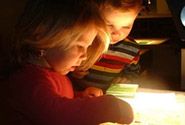
<p><a href="http://streaming.videatives.com/playlists/share/f46aa96263a1a472fc2e03052d2dba80" target="_blank"><img class="imgborder" src="http://www.videatives.com/assets/mailing/images/screens/vv141.jpg" border="0" alt="Videative Views Video" width="146" height="109" align="left" /></a><em>Click on thumbnail to watch inside our video library</em>.&nbsp;The pre-kindergarten class featured in this video has been investigating several musical concepts for several months. In this experience, Jack is conducting his classmates in a drum ensemble. Before the video begins, the children were all playing the drums at the same time and were expressing frustration about being heard. Jack and his friend came up with a solution that the class agreed upon. Each person would be assigned a number, and when his/her number was called, it would be his/her turn to play. When children develop their own system of rules, are they more invested in following them? Notice how all of the drummers are engaged and responding to Jack’s instruction as they wait for their number to be called. Jack then uses the numbers to conduct, rather than his voice. Was this another rule created by the children to move the focus back to the sound of the drum? By giving Jack the numbers, we hear only the sounds of the drums being played.</p>
<p>Notice that Jack not only holds up a number, he also extends it forward as if to signal “hit now.” The children spontaneously invent a game of beating Jack to his signal. They hit their respective drums at the first indication of what number he is about to lift. They laugh. Perhaps waiting for their number, or anyone’s number, has become too much to ask six drummers, in spite of the impulse control they have shown up to this point. Also, because Jack holds up only one number at a time, drums with different tonal values are never hit at the same time.</p>
<p>Their impatience could actually be the catalyst for new rules about how they use these numbers. Let’s assume the teacher comments on how long they have to wait and suggests they invent new rules that bring more drumming into play. The children might suggest Jack hold up more than one number. If this is cumbersome, the teacher might offer to make more than one copy of each number and put Velcro on the backs of the copies, so they stick to a vertical fabric board.</p>
<p>Once the children see their numbers lined up, maybe even some on top of another (simultaneous hits), it would be reasonable to assume they would see the potential of spacing the numbers at different intervals, thereby capturing not only the sequence of the drum hits, but also the interval of time between hits. Now, the children have reinvented the beat. This real episode and its imagined extensions provide us with a wonderful example of constructivist teaching, where children invent and reinvent symbolic rules because they have experienced the problems one has without them. To understand is to invent a solution to a problem one has experienced.<br />
<P></P><br />
Runtime: 1 minute 37 seconds.<br />
</p>
<p>To purchase and download a higher resolution version of this video, plus the above text, <a href="http://www.videatives.com/store/product_info.php?products_id=304">click here</a> </p>
<p>To subscribe to our streaming video library of over 250 video clips with supporting text, <a href="http://videatives.com/store/index.php?cPath=11">click here</a>.</p>
]]></content:encoded>
			<wfw:commentRss>http://videatives.com/blog/2011/11/issue-141-reinventing-music-notation/feed/</wfw:commentRss>
		<slash:comments>0</slash:comments>
		</item>
		<item>
		<title>Issue #130, junior Kumon versus senior Play</title>
		<link>http://videatives.com/blog/2011/05/issue-130-junior-kumon-versus-senior-play/</link>
		<comments>http://videatives.com/blog/2011/05/issue-130-junior-kumon-versus-senior-play/#comments</comments>
		<pubDate>Sun, 22 May 2011 12:57:47 +0000</pubDate>
		<dc:creator>Staff</dc:creator>
				<category><![CDATA[Videative Views]]></category>

		<guid isPermaLink="false">http://videatives.com/blog/?p=489</guid>
		<description><![CDATA[See What Children Know 
 Parents across the country are enrolling their children in the Kumon Junior program for 3- to 5-year-old children.  The Kumon Junior program emphasizes observable achievements in math and reading.  Even parents who are not completely convinced that 3-year-olds should read and calculate still report their satisfaction with Kumon [...]]]></description>
			<content:encoded><![CDATA[<p><span class="subhead" style="font-weight: bold;">See What Children Know </span></p>
<p><a href="http://streaming.videatives.com/playlists/share/0c46b8d7229b1e9131234828ec322c4d" target="_blank"><img class="imgborder" src="http://www.videatives.com/assets/mailing/images/screens/vv130.jpg" border="0" alt="Videative Views Video" width="146" height="109" align="left"></a> Parents across the country are enrolling their children in the Kumon Junior program for 3- to 5-year-old children.  The <a href="http://www.kumon.com/WhyJrKumon.aspx">Kumon Junior program</a> emphasizes observable achievements in math and reading.  Even parents who are not completely convinced that 3-year-olds should read and calculate still report their satisfaction with Kumon Junior because their children can recognize their own success, and this increases their self esteem and achievement motivation. Play-based programs have difficulty creating this same level of parent satisfaction, somewhat because the achievements of successful play episodes have no formal symbol system, such as print or numbers, to make explicit what is being learned.</p>
<p>Despite decades of research that supports the value of play for learning, creativity, and development, the school discourse about play is not closely mapped to observable achievements. Here is an example of school discourse about play that is mostly unpersuasive: &ldquo;Children are learning physics when they build a tower with blocks.&rdquo;   This tweet is too grand.  Or: &ldquo;Children learn hand-eye coordination when they build a tower of blocks.&rdquo;  This tweet is too banal. Could video documentation improve the discourse about play? What if we watched a two-minute video of a child actually building with blocks and then created a printed notation to represent the complexity of the child&rsquo;s strategies, abortive moves, substitutions, adjustments, and exchanges to create, for example, a wall with a window.  Or what if we watched a two-minute video of three children negotiating roles in a pretend drama and again, created a printed notation that revealed the complexity and competence of their negotiation strategies.  I am afraid that if we do not,  structured reading/math skills-based programs will draw children away from spontaneous play-based programs.  Play based-programs need new symbol systems that represent achievement as clearly as 1 + 1 = 2.</p>
<p>At Videatives, we work hard to improve the visual representation of children&rsquo;s complex thinking during play.   We do this by hyperlinking short video clips to key phrases in the explanatory text. This format forces one to represent what the child is thinking, since the video itself shows what the child is doing.  We also create computer animations to highlight a sequence of learning during play or add a sound track that speaks the children&rsquo;s thoughts (<a href="http://streaming.videatives.com/playlists/share/0c46b8d7229b1e9131234828ec322c4d">click here to see these 3 examples</a>).  We might also represent children&rsquo;s achievements in play by making notations that show how they have changed a game from win-lose to win-win.  Such notations might be revisited by the children, and would certainly help parents to see what children know.  We hope you agree with our thoughts on this issue  and will join our efforts to improve the symbol systems we use in our discourse about play.  Once done, perhaps <em>junior</em> Kumon can be replaced with <em>senior</em> Play..</p>
]]></content:encoded>
			<wfw:commentRss>http://videatives.com/blog/2011/05/issue-130-junior-kumon-versus-senior-play/feed/</wfw:commentRss>
		<slash:comments>0</slash:comments>
		</item>
		<item>
		<title>Issue #127, Stages of Block Play on a Lazy Susan</title>
		<link>http://videatives.com/blog/2011/04/issue-127-stages-of-block-play-on-a-lazy-susan/</link>
		<comments>http://videatives.com/blog/2011/04/issue-127-stages-of-block-play-on-a-lazy-susan/#comments</comments>
		<pubDate>Tue, 12 Apr 2011 23:34:52 +0000</pubDate>
		<dc:creator>Staff</dc:creator>
				<category><![CDATA[Videative Views]]></category>

		<guid isPermaLink="false">http://videatives.com/blog/?p=467</guid>
		<description><![CDATA[See What Children Know 
 Click on the thumbnail to watch this video inside our video library. Most block-building sets are composed of geometric shapes that stack and align with one another. What new forms of play do we see when we add dowels that fit into holes in a disk that revolves? In this [...]]]></description>
			<content:encoded><![CDATA[<p><span class="subhead" style="font-weight: bold;">See What Children Know </span></p>
<p><a href="http://streaming.videatives.com/playlists/share/d4437ca60e0682cab3abe11058076f3c" target="_blank"><img class="imgborder" src="http://www.videatives.com/assets/mailing/images/screens/vv127.jpg" border="0" alt="Videative Views Video" width="146" height="109" align="left"></a><em> Click on the thumbnail to watch this video inside our video library.</em> Most block-building sets are composed of geometric shapes that stack and align with one another. What new forms of play do we see when we add dowels that fit into holes in a disk that revolves? In this video clip we present children at different ages using <a href="http://www.learningmaterialswork.com/store/torno_torno.html">Torno Torno</a> from Learning Materials Workshop,including some of the play forms that, as a sequence, represent higher and higher levels of thinking. You might find it useful to take a developmental perspective as you co-play with children using these or similar blocks. The addition of a rotating platform adds some interesting variations that children love to explore, such as where the lead block will stop. The entire clip is divided into 7 segments, each treated as a more complex play form than the previous segments. The segments are separated by a few seconds of black, and the beginning of each segment is identified in the text, using the time code in the lower right side of the video window. We eliminated the sound track so that you can look more closely at the action.</p>
<p>To purchase and download a high-resolution version of Stages of Block Play on a Lazy Susan, plus our text analysis of the experience, <a href="http://www.videatives.com/store/product_info.php?products_id=274">click here</a>.</p>
<p>To subscribe to our streaming video library of over 220 video clips with supporting text, <a href="http://videatives.com/store/index.php?cPath=11">click here</a>.</p>
<p><span class="subhead" style="font-weight: bold;">Notes from the Field </span></p>
<p>We are delighted to announce that after a two-year hiatus, Boulder Journey School, which is the source of most of the Videatives video, is once again hosting a summer conference, Classroom Experiences as Catalysts: Contemporary Conversations Surrounding Early Childhood Education. Presentations, discussions and materials workshops will include the use of technology in early childhood classrooms, evaluating our understanding of materials, and video as a tool for self-reflection. For more information and to register for this conference, please go to <a href="http://www.boulderjourneyschool.com/">www.boulderjourneyschool.com</a></p>
]]></content:encoded>
			<wfw:commentRss>http://videatives.com/blog/2011/04/issue-127-stages-of-block-play-on-a-lazy-susan/feed/</wfw:commentRss>
		<slash:comments>0</slash:comments>
		</item>
	</channel>
</rss>